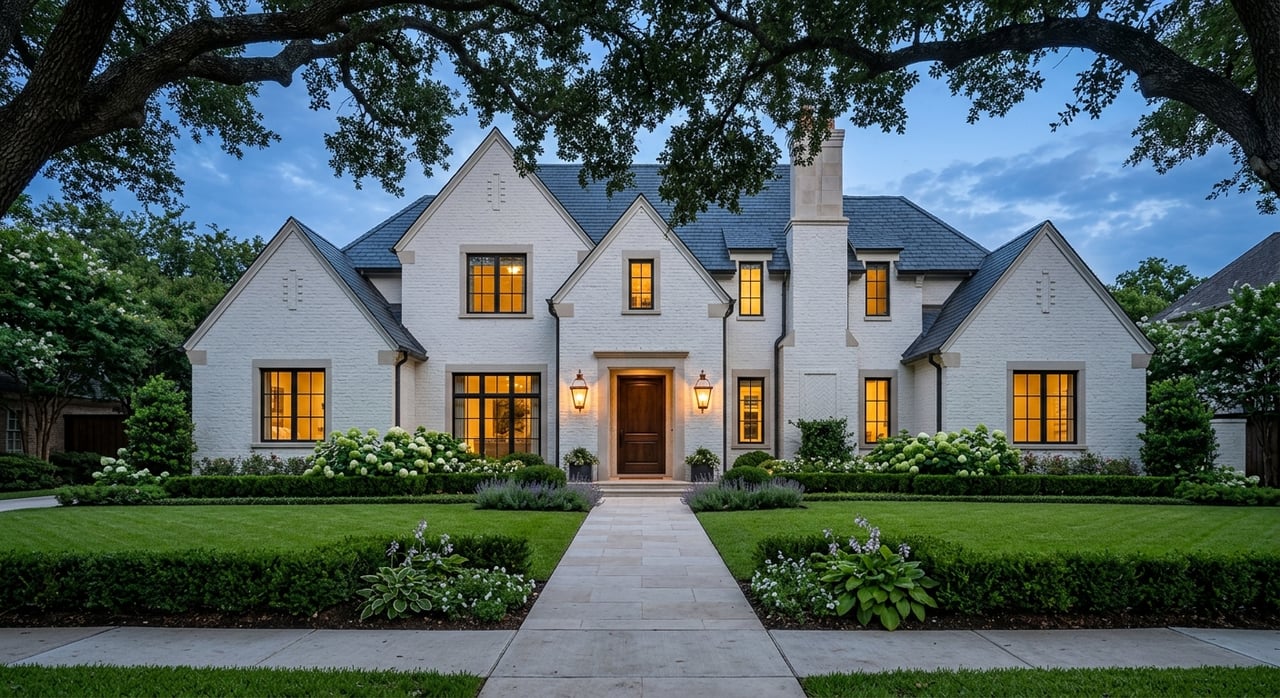
If you are watching the Park Cities luxury market, one thing stands out fast: this is not just "Dallas real estate" with a higher price tag. Highland Park and University Park operate as distinct micro-markets with different price points, inventory patterns, and pacing. If you want to buy or sell with confidence, understanding those differences can help you set a smarter strategy from the start. Let’s dive in.
Park Cities market at a glance
The Park Cities sit far above the broader Dallas market on price, price per square foot, and overall positioning. In March 2026, Highland Park’s market snapshot showed a median listing price of $4.9 million, 43 active listings, 31 median days on market, and $922 per square foot.
University Park’s housing market came in at a median listing price of $2.6 million, with 55 active listings, 41 median days on market, and $718 per square foot. By comparison, Dallas overall was at a $420,000 median listing price, 5,238 active listings, 50 days on market, and $245 per square foot.
That gap matters because it shows how differently buyers and sellers need to think in the Park Cities. These are highly specific luxury markets where pricing, presentation, and timing tend to matter more than broad citywide trends.
Highland Park vs University Park
Highland Park currently trades at the higher premium. Its $4.9 million median listing price and $922 price per square foot place it at the top of the comparison set in the research, and its 31-day median market time suggests that well-positioned homes can still move efficiently.
University Park is also firmly in luxury territory, but the market behaves a little differently. With a $2.6 million median listing price, $718 per square foot, and 41 median days on market, it offers slightly more inventory and a bit more time for buyers to evaluate options.
Closed-sales data reinforces this split. According to the Q2 2025 closed-sales report from Chicago Title, Highland Park recorded 30 sales with a median sale price of $3.55 million, while University Park recorded 82 sales with a median sale price of $2.355 million.
In plain terms, Highland Park appears to command the higher ticket with lower volume, while University Park sees more transaction flow. That distinction can shape everything from offer strategy to seller expectations.
Why price per square foot matters
In luxury markets, median listing price tells only part of the story. Price per square foot often gives you a clearer read on how strongly a market is being valued.
Highland Park currently sits at $922 per square foot, while University Park sits at $718 per square foot, based on the latest Realtor.com local market data. That is a meaningful spread, especially when you are comparing homes across similar price ranges.
The year-over-year trends are also worth watching. Highland Park’s price per square foot was up 18.66% year over year, while University Park was up 5.43%. Over a three-year period, though, University Park showed stronger price-per-square-foot growth at 26.86%, compared with Highland Park’s 1.65%.
That combination suggests two things. First, Highland Park remains the more expensive market today. Second, University Park has shown steadier longer-run compounding, which may matter to buyers thinking about long-term value trends.
Inventory is small and can shift quickly
One of the biggest mistakes people make in the Park Cities is assuming the numbers are large enough to smooth out every trend. They are not. These are small luxury markets, so even a handful of listings can noticeably change what the market feels like from one month to the next.
In Highland Park, active listings were up 4.88% year over year and up 48.28% over three years, according to local market reporting. In University Park, active listings were down 46.60% year over year but up 25% over three years.
That matters because headline changes can look dramatic in smaller markets. A buyer or seller should read these shifts as directional, but always in the context of limited supply and very local competition.
What market speed tells you
Days on market can reveal how much urgency exists, but context matters. In the latest snapshot, Highland Park moved faster than University Park, with 31 median days on market versus 41.
That does not mean every Highland Park home flies off the shelf or that every University Park listing lingers. It does suggest that Highland Park sellers who price and present their homes well may be rewarded with a faster response.
The research also notes that Highland Park homes sold for approximately asking price on average in February 2026. That is an important signal because it points to list-price precision and strong buyer recognition of value when a home comes to market correctly.
Park Cities compared with other Dallas luxury areas
The Park Cities do not exist in a vacuum. Buyers often compare them with other Dallas luxury corridors, and sellers benefit from knowing how their market stacks up.
Here is a quick view of the comparison set from the research report:
| Area | Median Listing Price | Active Listings | Median DOM | Price Per Sq Ft |
|---|---|---|---|---|
| Highland Park | $4.9M | 43 | 31 | $922 |
| University Park | $2.6M | 55 | 41 | $718 |
| Preston Hollow North | $3.52M | 22 | 25 | $598 |
| Lakewood | $2.05M | 80 | 35 | $494 |
| Bluffview | $2.55M | 16 | 38 | $558 |
| Dallas overall | $420K | 5,238 | 50 | $245 |
The comparison shows how strong the Park Cities premium really is. Highland Park has the highest price per square foot in this group, followed by University Park.
At the same time, Preston Hollow North posted the fastest turnover at 25 days on market. Lakewood offered the deepest inventory among the luxury comparators, while Bluffview had very limited supply and a 38-day market pace.
This is why it helps to think of the Park Cities as separate micro-markets rather than a single luxury label. Buyers may cross-shop these areas, but the pricing dynamics and pace are not interchangeable.
What this means for sellers
If you are selling in Highland Park, the market data supports a premium position, but not a casual one. Higher pricing power does not remove the need for careful preparation, accurate positioning, and a clear go-to-market plan.
If you are selling in University Park, strategy may matter even more. Buyers may have a little more choice and a little more time, which means mispricing can show up faster in the form of longer days on market.
In both markets, the research points to a simple takeaway: neighborhood name alone does not carry the deal. Pricing accuracy, condition, and presentation still matter.
That is where a full-service approach can make a real difference. If you are preparing a home for sale, having support with valuation, staging, renovation guidance, contractor coordination, and transaction management can help you compete more effectively in a market where details influence results.
What this means for buyers
If you are buying in Highland Park, be prepared for a faster-moving and more expensive environment. The higher price per square foot and shorter market time suggest that desirable homes can attract attention quickly.
If you are buying in University Park, you may have slightly more breathing room, but it is still a competitive luxury market. A slower pace compared with Highland Park does not mean low pressure. It simply means the rhythm may be a little less compressed.
For buyers comparing multiple Dallas luxury areas, the research suggests a useful framework:
- Choose Highland Park if you are targeting the highest price-per-square-foot tier in this comparison set.
- Consider University Park if you want Park Cities positioning with somewhat more transaction flow.
- Watch Preston Hollow North if speed is a major factor in your search.
- Look at Lakewood if having more inventory to evaluate matters to you.
- Keep Bluffview in mind if you are comfortable with limited supply and a middle ground on pace.
The right move depends on your goals, your timing, and the type of home you want to buy. In luxury markets, broad averages are helpful, but the best decisions usually come from reading each property and each pocket of inventory closely.
Why both live and closed data matter
One of the most useful notes in the research report is the difference in methodology between the sources. Realtor.com’s market pages are live, listing-based snapshots, while the Chicago Title report reflects closed sales from NTREIS.
That means each source answers a different question. Live listing data shows what you are competing with right now, while closed-sales data shows what the market has recently accepted.
When you use both together, you get a more grounded view of the Park Cities luxury market. You can see today’s pricing environment and also check it against actual recent sales behavior.
If you are trying to understand where your home fits or how aggressively to pursue a purchase, that combination is often more useful than relying on a single headline number.
The Park Cities luxury market rewards local knowledge, careful reading of the numbers, and a strategy that fits the specific submarket you are in. If you want experienced guidance on pricing, preparation, timing, or your next move in the Dallas area, Jenny Capritta can help you navigate the process with a practical, full-service approach.
FAQs
What is the difference between Highland Park and University Park home prices?
- Highland Park currently has a higher median listing price at $4.9 million, compared with $2.6 million in University Park, based on the latest market snapshot in the research report.
How fast are homes selling in the Park Cities luxury market?
- Highland Park had a median 31 days on market, while University Park had 41 days on market in the latest reported snapshot, showing that Highland Park is currently moving faster.
Why is price per square foot important in Park Cities real estate?
- Price per square foot helps you compare value more clearly within luxury markets, and the research shows Highland Park at $922 per square foot versus $718 in University Park.
How does the Park Cities market compare with Dallas overall?
- The Park Cities are far above Dallas overall on median listing price and price per square foot, with Dallas at $420,000 median listing price and $245 per square foot in the research snapshot.
What should sellers know about pricing a Park Cities home?
- The research suggests that accurate pricing and strong presentation matter in both Highland Park and University Park, and mispricing can lead to longer market time, especially where buyers have more choices.
What data should buyers and sellers use to understand the Park Cities market?
- The research recommends using both live listing data from Realtor.com and closed-sales data from the Chicago Title NTREIS report so you can compare current competition with recent completed sales.