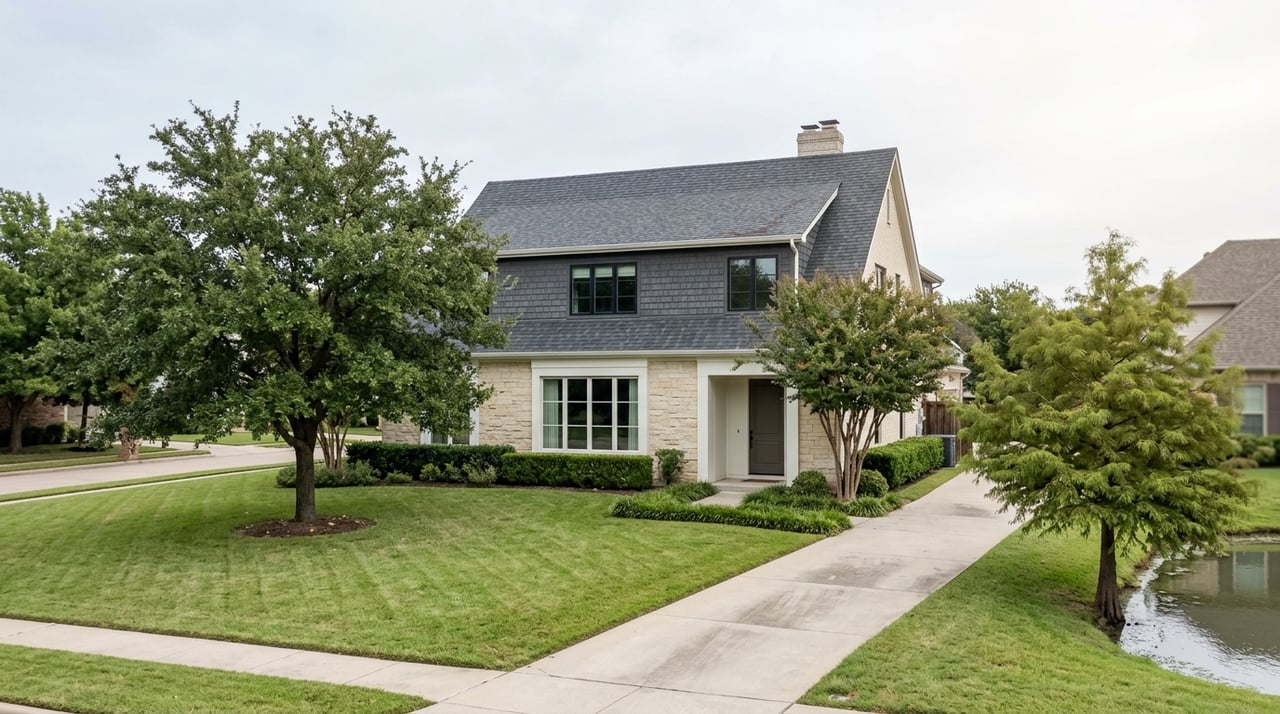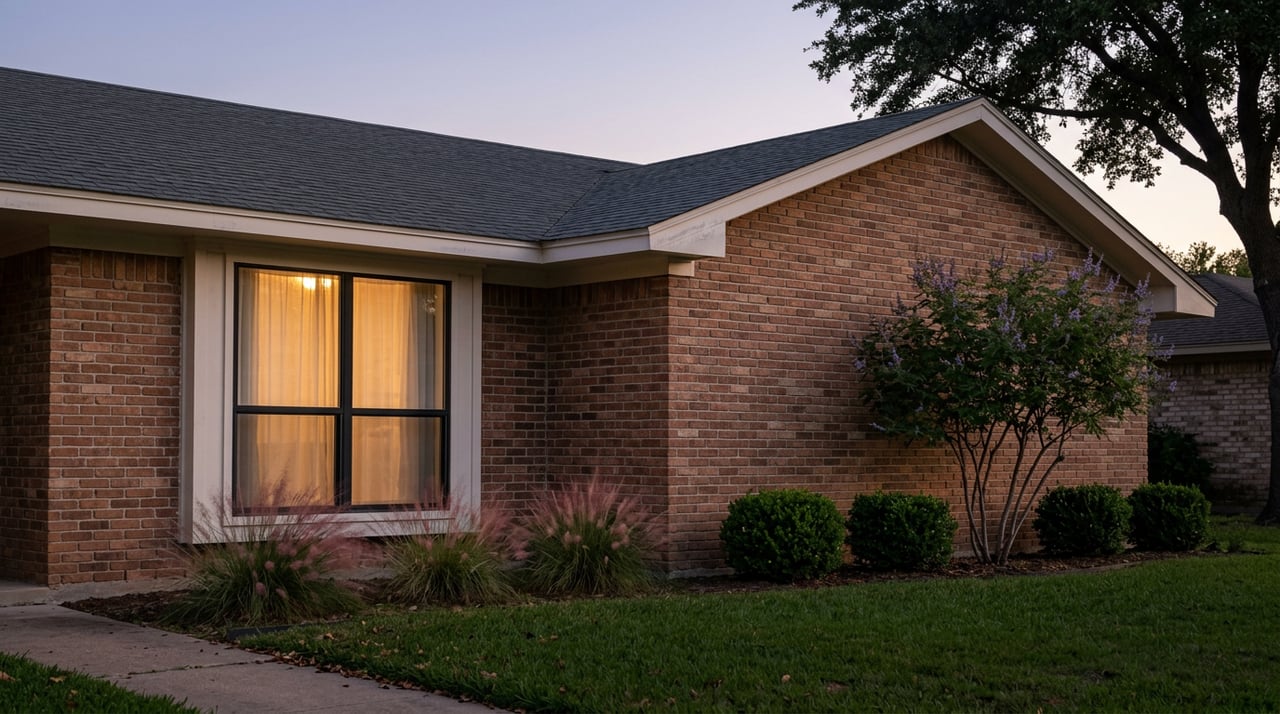
You're at the kitchen table on one of Lochwood's ladder streets, the ones that step down toward the greenbelt on both ends, and you're filling out the Seller's Disclosure Notice for a house you've owned since before the last remodel. You get to a section that wasn't there the last time you sold a house. It asks whether the property is currently covered by insurance. It asks whether you've ever been denied coverage, dropped, or pushed onto the state's high-risk plan. It asks about private roads, storage tanks, conservation easements.
None of that existed on the form a year ago. It exists now because the Texas Real Estate Commission adopted a revised Seller's Disclosure Notice, Form 55-1, on May 4, 2026. It took effect May 28, and became mandatory for every residential sale in Texas on July 1. If you're listing a Lochwood home this fall, you're using the new form whether you've heard of the change or not.
Here's the part that makes this more than a paperwork update if you own one of the neighborhood's original homes. Lochwood's first houses went up in 1951, on Wyatt Street and the blocks just west of Jupiter Road, with construction continuing through the 1960s and into the 1970s. That means a meaningful share of the neighborhood's housing stock is sitting at 50 to 75 years old right now, in 2026. That's not a coincidence worth ignoring. It's the exact window in which the systems original to these homes, the drain lines, the foundations, the roofs, start generating the kind of history the new form specifically asks you to disclose.
What Actually Changed On July 1
The revised form added several new categories directed by the Sunset Advisory Commission's review of TREC. The insurance section is the one that catches most sellers off guard. You now have to state whether the property is presently insured, whether it carries windstorm coverage, and whether you've had any trouble insuring it at all. TREC also created a companion form, the Water Notice, for groundwater and surface water rights, effective July 1 as well. That one matters more for acreage and well properties than for a standard Lochwood lot on city water, but the insurance questions apply to every seller in the state.
The form kept its core purpose. You're still disclosing what you actually know about the physical condition of the property, not warranting it, not guessing, not producing an inspection report of your own. But the list of things you're now asked to know about got longer, right as the original systems in this neighborhood's oldest homes got older.
Why Lochwood Feels This Sooner Than Newer Neighborhoods
Cast iron drain lines were the standard in Dallas through the mid-1970s, and they typically last 50 to 75 years before internal corrosion starts creating the collapses, root intrusions, and slow leaks that eventually show up as foundation trouble. A home built in Lochwood in 1958 is 68 years old this year. That's not early in the failure window. That's squarely inside it.
The foundations tell a similar story. Many of the original ranch homes in Lochwood were built pier-and-beam, a common method for this era of East Dallas construction. Pier-and-beam foundations sit above grade, but the piers still rely on Dallas's expansive clay soil, which swells during wet stretches and contracts hard during dry Texas summers. That cycle stresses any foundation type, and it's been running under these homes for six or seven decades.
Here's a rough way to see where a Lochwood home lands depending on when it was built:
| Built | Age in 2026 | What's likely still original |
|---|---|---|
| 1951-1955 | 71-75 | Drain lines at or past typical failure window; foundation has absorbed 70+ years of clay cycling |
| 1956-1965 | 61-70 | Drain lines inside the failure window; foundation movement history likely, documented or not |
| 1966-1975 | 51-60 | Drain lines approaching the window; systems may have seen one prior repair cycle |
| 1976 and later | Under 50 | Cast iron less likely; foundation type may differ |
This is why the new insurance question isn't abstract for a Lochwood seller the way it might be for someone listing a five-year-old build in a newer subdivision. Insurance carriers have been pulling back or raising rates on older roofs and properties with prior claims. If your home has had a foundation repair, a roof replacement after hail, or a slab leak claim in the last several years, there's a real chance that history already touched your coverage, and now you have to say so on the form.
The Paper Trail You Actually Need Before You List
The good news is that none of this requires guesswork. It requires documentation you likely already have somewhere, or can get quickly.
- Engineering reports and warranties from any past foundation work
- Camera inspection footage if a plumber has ever scoped your sewer line, even for a routine check
- Permit records for additions, room conversions, or major system replacements
- Insurance claim history and any non-renewal or FAIR Plan letters from your carrier
- Receipts for roof, HVAC, or electrical replacements, with dates
If you're planning repairs before listing, know that most significant work in Dallas requires a permit, and permit fees on a mid-size project commonly run in the hundreds to low thousands of dollars, with processing typically taking a few weeks through the city's development services process. That timeline is worth building into your listing schedule now, not discovering in October.
What This Means For Timeline And Price
Lochwood homes have recently traded in the roughly $430,000 to $700,000 range, depending on size, condition, and how much of the original 1950s and 60s footprint has been updated. A buyer comparing two similar ranch homes at similar prices will read the disclosure form closely under the new rules, and the seller who can hand over a scoped sewer line video, a foundation engineer's letter, and a clean insurance history is negotiating from a stronger position than the one who checks "unknown" across the board. Unknown isn't a violation. It also isn't leverage. The gap between those two sellers rarely shows up as a lawsuit. It shows up as a lower offer, a longer option period, or a buyer asking for a credit against every unanswered question on the form.
A Few Questions Worth Answering Before You List
Do I need a sewer camera inspection before I put my house on the market? It's not required, but if your home was built before the mid-1970s, a camera inspection gives you the documentation to answer the disclosure question with confidence instead of a guess, and it tells you what a buyer's inspector is about to find anyway.
What if I genuinely don't know whether my home has cast iron pipes or past foundation work? Mark it honestly as unknown. The form is built for exactly this situation. What you don't want to do is guess "no" on something you never actually checked.
Does the new insurance question apply if I'm currently insured with no issues? Yes, but it's a short answer. The form is designed to catch the sellers who've had trouble getting or keeping coverage, not to complicate things for the ones who haven't.
If you're getting ready to sell a Lochwood or Eastwood Estates home this year, the paperwork and the house's own history are telling the same story at the same time. That's worth a conversation before you list, not after an inspection surprises you. Jenny Capritta has spent decades walking East Dallas sellers through exactly this kind of transition, from gathering the right documentation to pricing a home accurately for what today's buyers are actually reading on the disclosure form. Get your free home valuation and find out where your home stands before the first showing, not after.