Saturday mornings at Lochwood Park start the same way they have for years. A handful of neighbors show up with paddles for pickleball on the court that also doubles as the tennis court. Somebody's dog is off leash for the ten minutes before anyone official shows up. Twice a year, spring and fall, that same patch of grass fills with a different crowd entirely: neighbors in work gloves, grabbing trash pickers and bags from a folding table, working through a cup of coffee and a doughnut before they fan out to clean their assigned block. This is Clean the Green, and it has been run by the Lochwood Neighborhood Association for longer than most of the people showing up have lived on their street.
None of this happens on a commercial strip, because Lochwood doesn't really have one. The neighborhood is a compact, roughly pentagon-shaped square mile bounded by East Northwest Highway on the north, East Lake Highlands Drive on the west, Easton Road on the southwest, Garland Road on the southeast, and Jupiter Road on the east. Every one of those boundary lines is a road built to move traffic through the neighborhood, not to it. There's no equivalent of Lower Greenville or the Casa Linda Plaza sitting inside those lines. What sits inside them instead is 12.3 acres of park, and that park has quietly become the piece of shared infrastructure that everything else in the neighborhood's calendar gets built around.
That's the part worth understanding if you already live here: the park isn't an amenity Lochwood has in addition to a social center. For a neighborhood this size, it functions as the social center, and the reason it works that way traces back to a deliberate choice about what the park would never become.
A Park That Was Built to Stay Small
Lochwood Park was established in 1955, not long after the first homes on Wyatt Street went up as the neighborhood's original build-out. A neighborhood-park scale of 12.3 acres was never going to compete with White Rock Lake's 1,000-plus acres a few minutes away, and it hasn't tried to. What it has instead is a baseball field, a basketball court, a pavilion with picnic tables, and walking trails, all sized for the people who live within walking distance rather than for people driving in from across the city.
The neighborhood made that scale a policy rather than an accident. The park's own rules explicitly rule out organized team or league play, reserving the space for casual recreational use only. That single decision is why the park still functions as a drop-in gathering spot decades later. A pickleball group coordinates informally through the neighborhood's own channels rather than through a booking system, and nobody has to fight a league schedule to get court time on a Saturday. Friends of Lochwood Park, the volunteer group that has looked after the space, formed in 1983, which means the park has now had more years of resident stewardship than it had years of existence before that group showed up.
The Shopping Center That Kept Changing Its Name
If you want a contrast case for how identity actually gets built in this neighborhood, look at what happened to its commercial anchor. What's now White Rock Marketplace started out as the Lochwood Shopping Center, got rebranded "Treehouse" in 1976, then reverted back to something closer to its original identity as Lochwood Mall by the early 1980s. A retail center went through three names in under a decade while the park a few blocks away kept doing the exact same thing it had always done: hosting pickup basketball, hosting Little League-adjacent games that were never technically a league, hosting the twice-yearly cleanup crew.
Retail chases whatever the market will support and rebrands when it doesn't. A neighborhood park with a no-league-play rule and a 40-plus-year volunteer group has no reason to reinvent itself, and that stability is exactly why it became the place residents organize around instead of a storefront.
Where the Park Crowd Actually Eats
None of this means Lochwood residents stay inside the boundary lines when they're hungry. The nearest cluster of restaurants and coffee shops sits just along Spur 244, the highway that forms the neighborhood's own northern edge, so getting there is a short drive rather than a real trip. White Rock Coffee handles the morning shift before a pickleball game. Lochland's Irish Pub, known for a shepherd's pie served with or without meat, and the retro-styled Dallas Diner cover the rest of the day along that same stretch.
On the opposite side of the neighborhood, where Garland Road forms the southeastern boundary, Goodfriend Beer Garden & Burger House sits in an unassuming strip shopping center at the corner of Peavy and Garland. It's the kind of place that doesn't advertise itself as a destination and doesn't need to, since it's already sitting right where Lochwood's own boundary line runs. Both stretches make the same point: Lochwood residents don't need a main street inside the neighborhood because two of the roads forming its edges already function as one.
The Calendar Nobody Puts on a Poster
The park and the boundary-road dining aren't the only things that hold the neighborhood together day to day. There's a seasonal rhythm here that shows up on nobody's tourism map. Each Halloween, homeowners on Maplegrove Lane go well beyond the usual porch pumpkin, decorating heavily enough that neighbors treat it as a lower-key alternative to the much larger Swiss Avenue Halloween tradition a few miles away. Around Christmas, the neighborhood association organizes an annual gathering built around a mini train ride, complete with a Santa sighting for the kids who show up. In the spring, the Casa View Art Association and the Friends of the Lochwood Library have partnered on an annual art exhibit at the Lochwood Branch Library, turning the library's community space into a gallery for local painters and photographers for an afternoon.
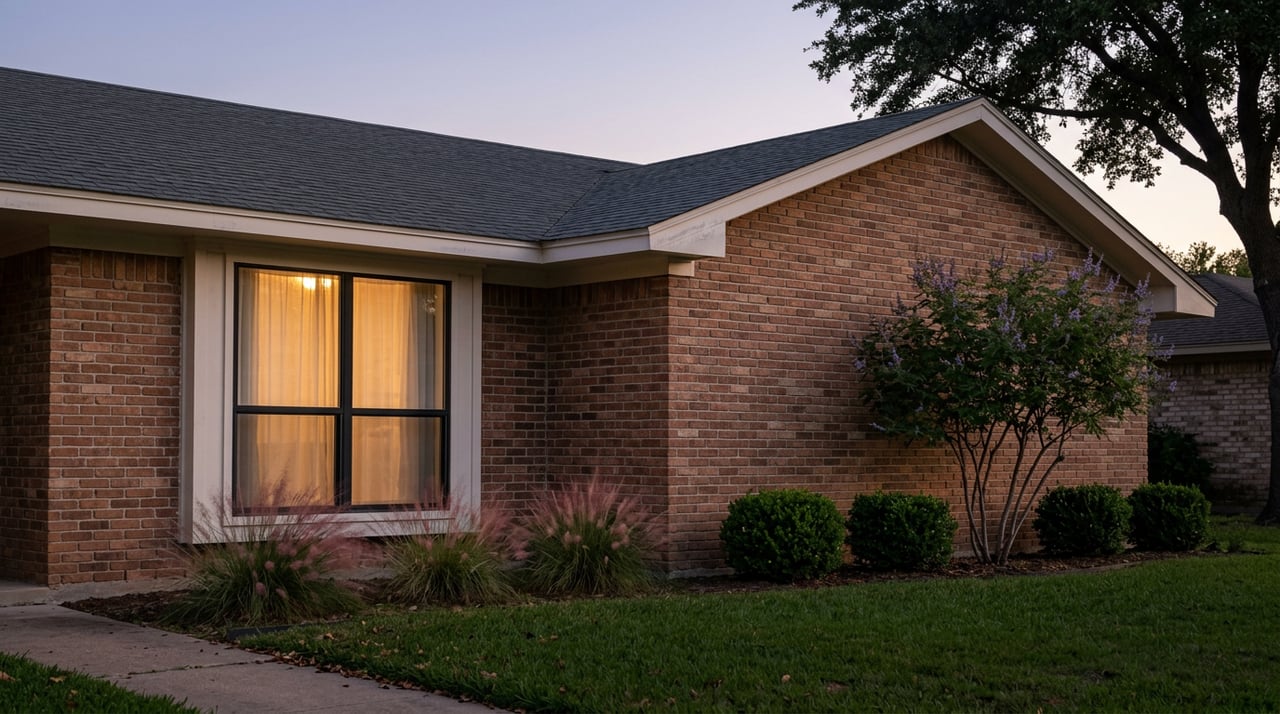
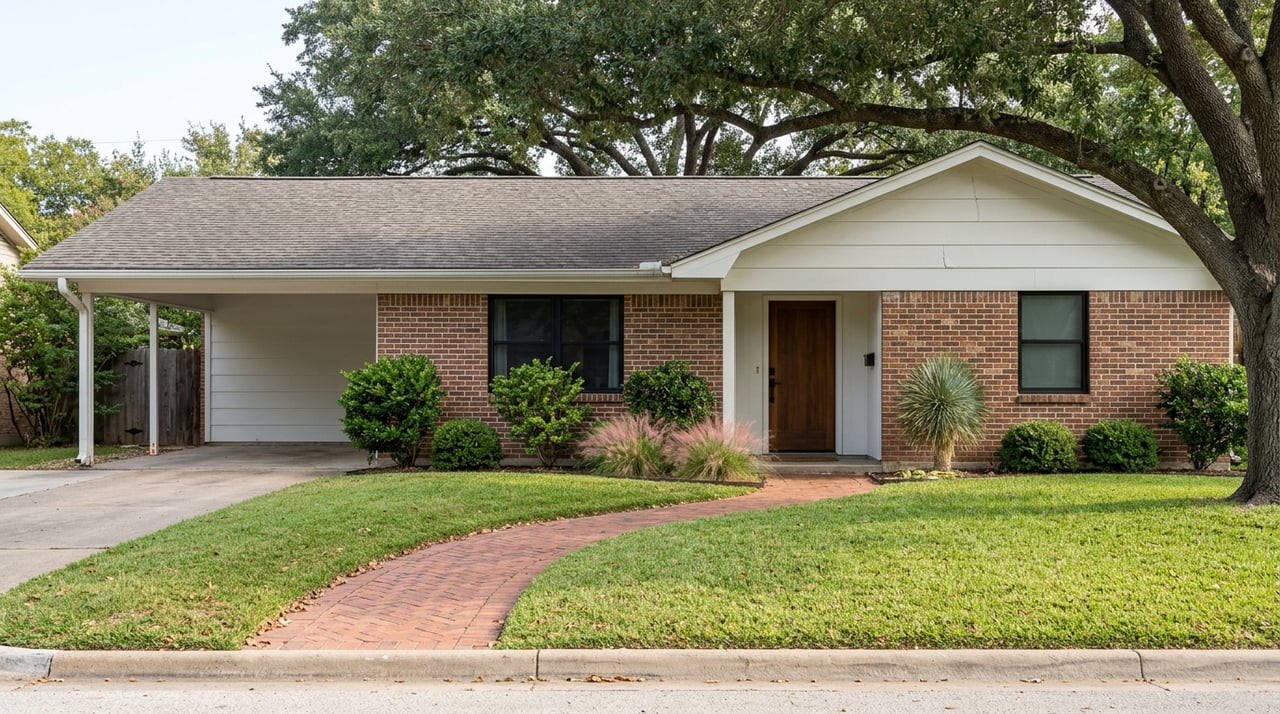
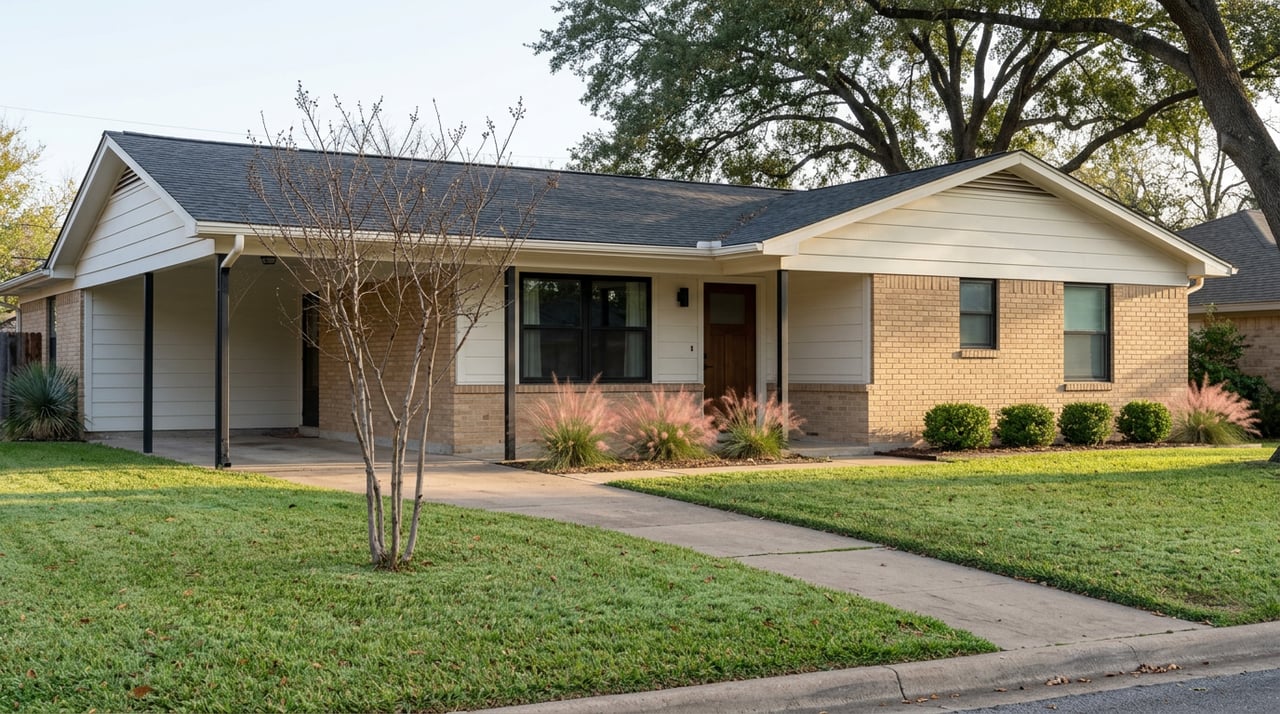
None of these events get regional press coverage. They don't need to. They exist because a neighborhood built almost entirely of ranch and split-level homes from the 1950s and 1960s, spread across the Lochwood, Lochwood Meadows, and Lochwood Estates subdivisions, still runs on the same volunteer infrastructure that's been organizing it for generations. The Lochwood Neighborhood Association keeps residents connected through its own newsletter and social channels, the same channels that announce when the next Clean the Green will happen or when the library exhibit reception is scheduled.
Why the Park Is the Real Story
Put the pieces together and the pattern is hard to miss. A neighborhood with no commercial main street, bounded by highways on every side, built its actual community infrastructure around a modest park that a volunteer group has maintained for more than four decades and that a no-league-play rule has kept accessible to whoever shows up on a given Saturday. The shopping center a few blocks away couldn't hold onto an identity for ten years. The park has held the same one for seventy.
That's not a small distinction if you're the kind of person who notices how a place actually works versus how it markets itself. Lochwood isn't a neighborhood organized around a walkable retail strip the way Lakewood or Casa Linda are. It's organized around a park, a creek corridor, and a set of traditions that residents run themselves, and that structure is a big part of why the neighborhood still feels the way it did decades ago, even as the homes around that park keep changing hands.
If you're weighing what a home in Lochwood, or in a similar East Dallas neighborhood, is actually worth to your day-to-day life, that kind of on-the-ground context matters more than a listing photo ever will. Jenny Capritta has spent decades working these specific streets and can walk you through what a property here really offers, park and all. Reach out for a free home valuation and a conversation grounded in the neighborhood itself.